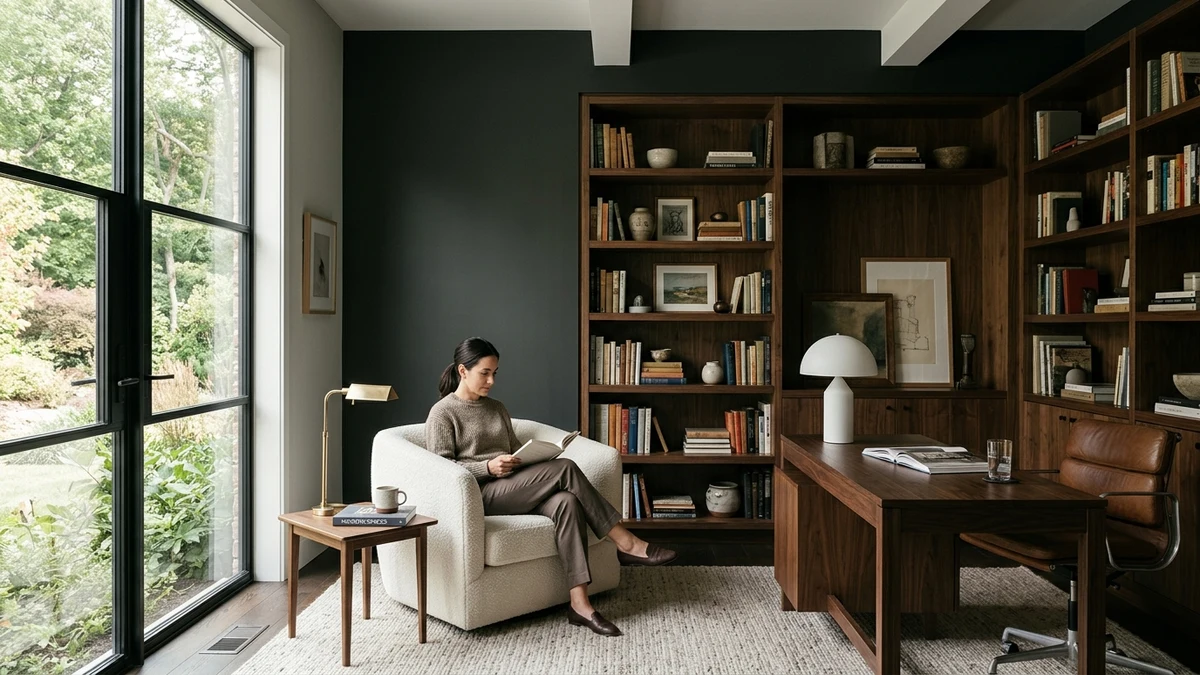
How to Prevent Repose Gray SW 7015 from Shifting Purple or Muddy
Sherwin-Williams Repose Gray (SW 7015) is a versatile greige-gray with an LRV of 58. Its complex base contains subtle green and violet-purple undertones that adapt to ambient light, shifting cooler under North-facing daylight and softer in warm South-facing rooms. Paired with dark accents like Iron Ore (SW 7069, LRV 6), it achieves balanced architectural depth.
When specifying gray coatings, understanding the underlying tint formulation is critical. Repose Gray sits squarely in the sweet spot between cool steel and warm taupe. However, if paired with yellow-toned oak floors or placed in a room illuminated by cool 6500K northern sky, its violet undertone may be stimulated. For our dedicated architectural breakdown, explore the complete Sherwin-Williams Repose Gray SW 7015 review, or consult our master paint colors and swatch analyzer for live metamerism simulations.
Repose Gray Technical Colorimetry
#CCC5B9For rooms requiring warmer illumination, consider warm greige wall color transitions such as Accessible Beige before applying sample swatches.
Dynamic Filterable Grays & Moody Charcoal Matrix: LRV and Undertone Spectrum
Sherwin-Williams grays span from high-reflectance greiges (Repose Gray at LRV 58) to pure light-absorbing architectural charcoals (Iron Ore at LRV 6 and Tricorn Black at LRV 3). Specifying precise LRVs ensures proper architectural contrast and prevents dark exterior siding from warping under intense thermal radiation.
Understanding the reflectance tier of your gray ensures appropriate ambient bounce. Mid-range grays reflect balanced daylight, while low-LRV charcoals establish anchor planes and focal accents across both traditional and minimalist modern aesthetics.
High-Contrast Trim and Accent Pairing: Iron Ore, Peppercorn, and Tricorn Black
Pairing low-LRV charcoals like Iron Ore (LRV 6) with high-contrast pure white trim combinations yields a dramatic 7.91:1 luminance ratio that instantly draws the eye to architectural millwork:
Architectural Trim Contrast & Pairing Engine
Calculate luminance contrast ratios between wall paint and moldings using spectrophotometer LRV mathematics.
Subtle monochromatic blend for seamless transitional walls.
Exterior Durability, Heat Absorption, and Low-LRV Siding Guidelines
Exterior applications demand rigorous attention to thermal physics. Low-LRV paints like Iron Ore (LRV 6) and Tricorn Black (LRV 3) absorb up to 97% of incident infrared solar radiation:
ASTM Solar Reflectance Index (SRI) & Vinyl Stability Warning
When applied to substrate materials such as cellular PVC trim or vinyl siding, low-LRV coatings can cause surface temperatures to exceed 160°F (71°C) during summer months. This thermal expansion leads to permanent warping, oil-canning, and caulking separation. Always verify that dark exterior coatings utilize heat-reflective pigment technology (such as Sherwin-Williams VinylSafe™ formulations) when coating non-wood exteriors.
Natural Fiber Stability
Cellulose wood structures safely dissipate heat without risk of plastic deformation.
VinylSafe Formulation
Mandatory reflective pigment technology preventing solar distortion above 160°F.
Frequently Asked Questions About Gray and Charcoal Paint Colors
01 Does Repose Gray look blue or purple?
Repose Gray SW 7015 is primarily a warm greige-gray, but it contains microscopic drops of violet and green colorants. In cool north-facing light or alongside low-Kelvin tungsten bulbs, its violet undertone can peek through, looking faintly lavender if paired with warm gold accents.
02 Is Iron Ore black or dark charcoal gray?
Iron Ore SW 7069 (LRV 6) is a deep, velvety charcoal rather than a pure stark black. It has subtle cool undertones that soften its appearance, making it far more forgiving and sophisticated on interior doors, accent walls, and exterior siding than pure Tricorn Black (SW 6258, LRV 3).
03 Can I paint vinyl siding with Iron Ore or dark charcoal?
Only if you use a formulation approved for vinyl. Standard dark paints with LRVs below 55 absorb excessive solar thermal radiation, which can cause vinyl siding to warp, buckle, or melt. Sherwin-Williams VinylSafe colors must be used for low-LRV exterior vinyl projects.
04 What is the best white trim to pair with Repose Gray?
Pure White SW 7005 (LRV 84) is the ideal trim match. It creates a crisp, clean border that emphasizes Repose Gray's refined depth without pulling out unwanted purple or green undertones.
05 What is the difference between Peppercorn and Iron Ore?
Iron Ore SW 7069 (LRV 6) is a very dark charcoal that sits right on the edge of black with subtle warm bronze-olive notes. Peppercorn SW 7674 (LRV 10) is noticeably lighter, presenting as a true slate gray with a soft, matte stone appearance.